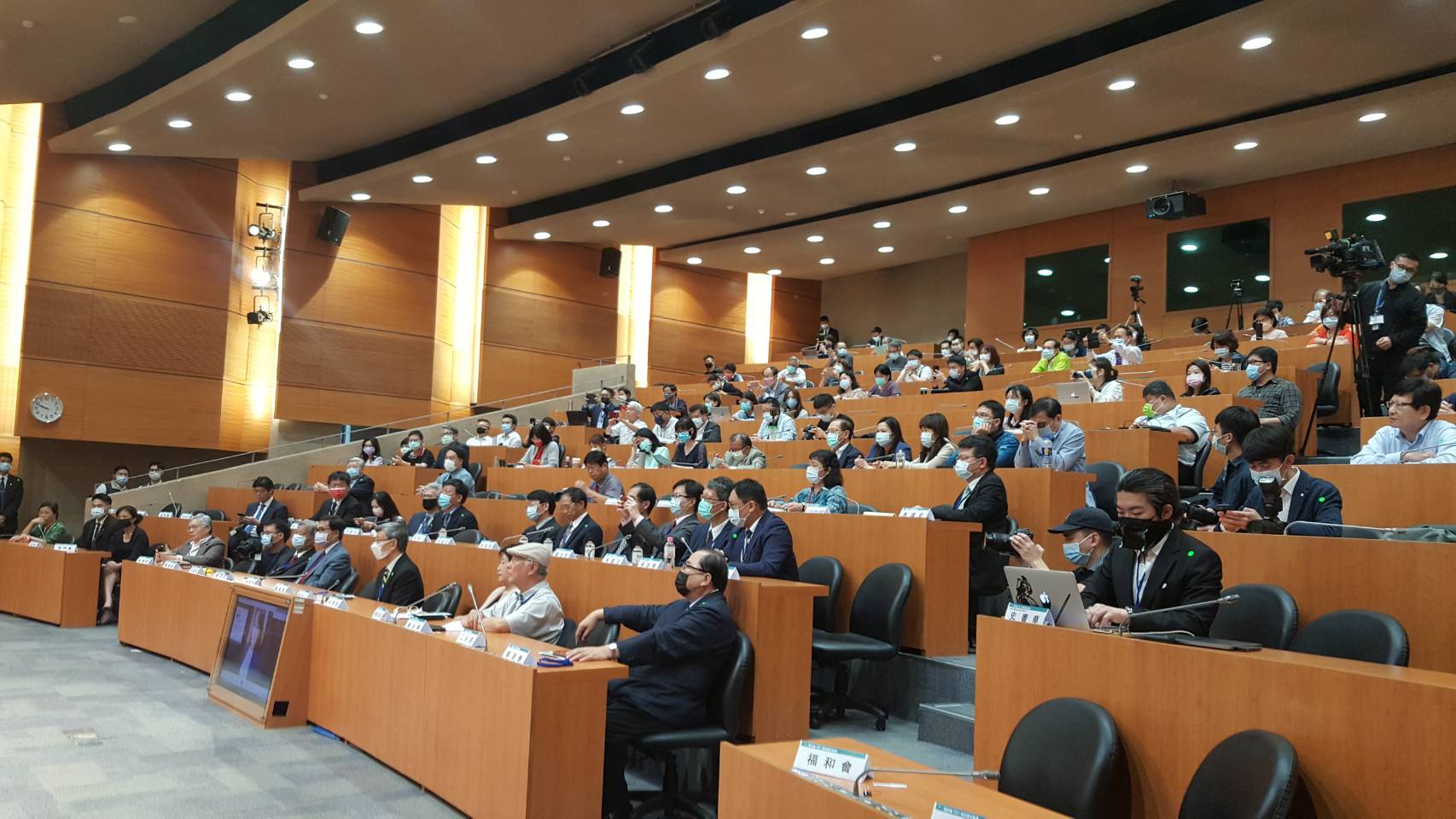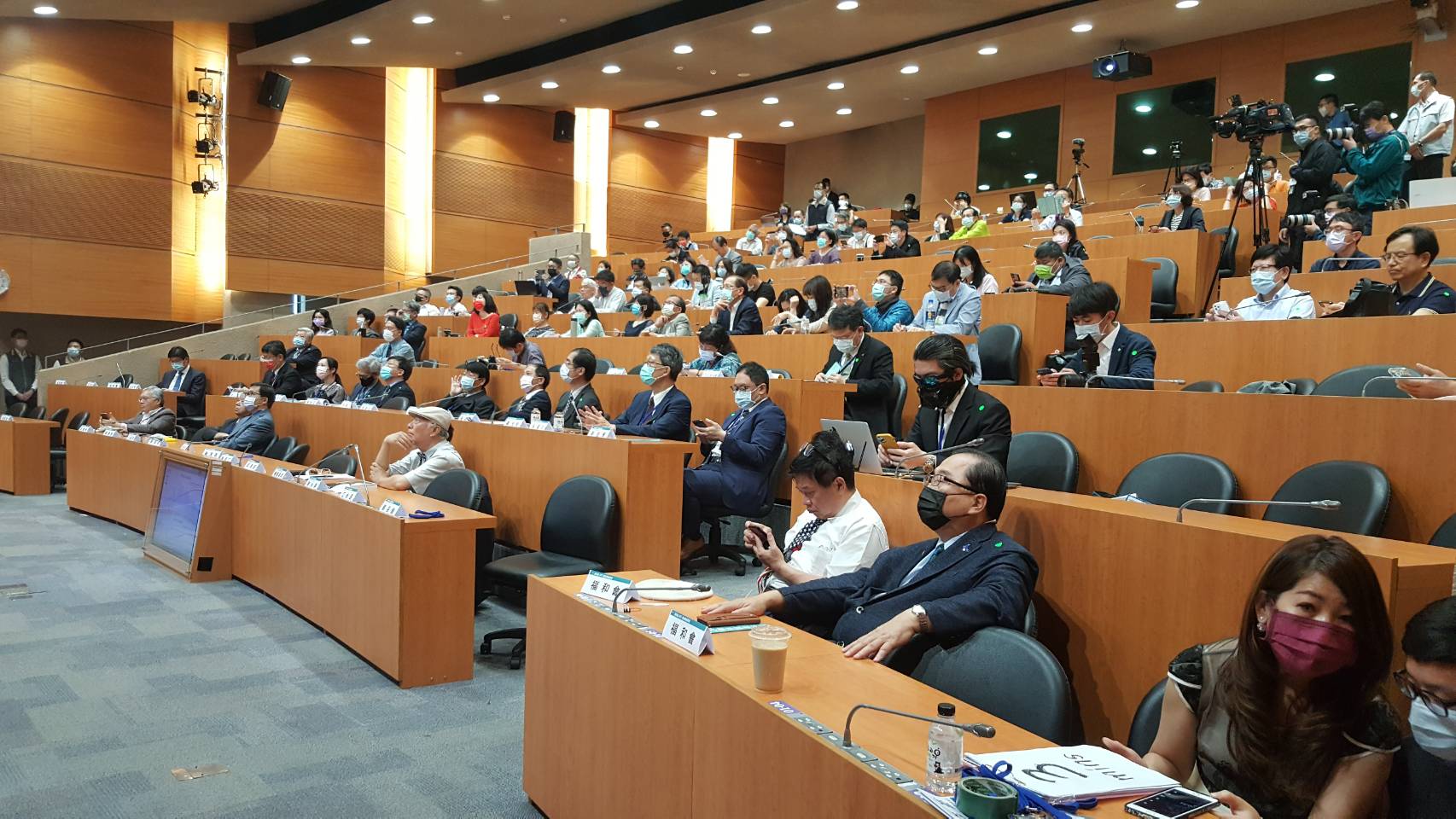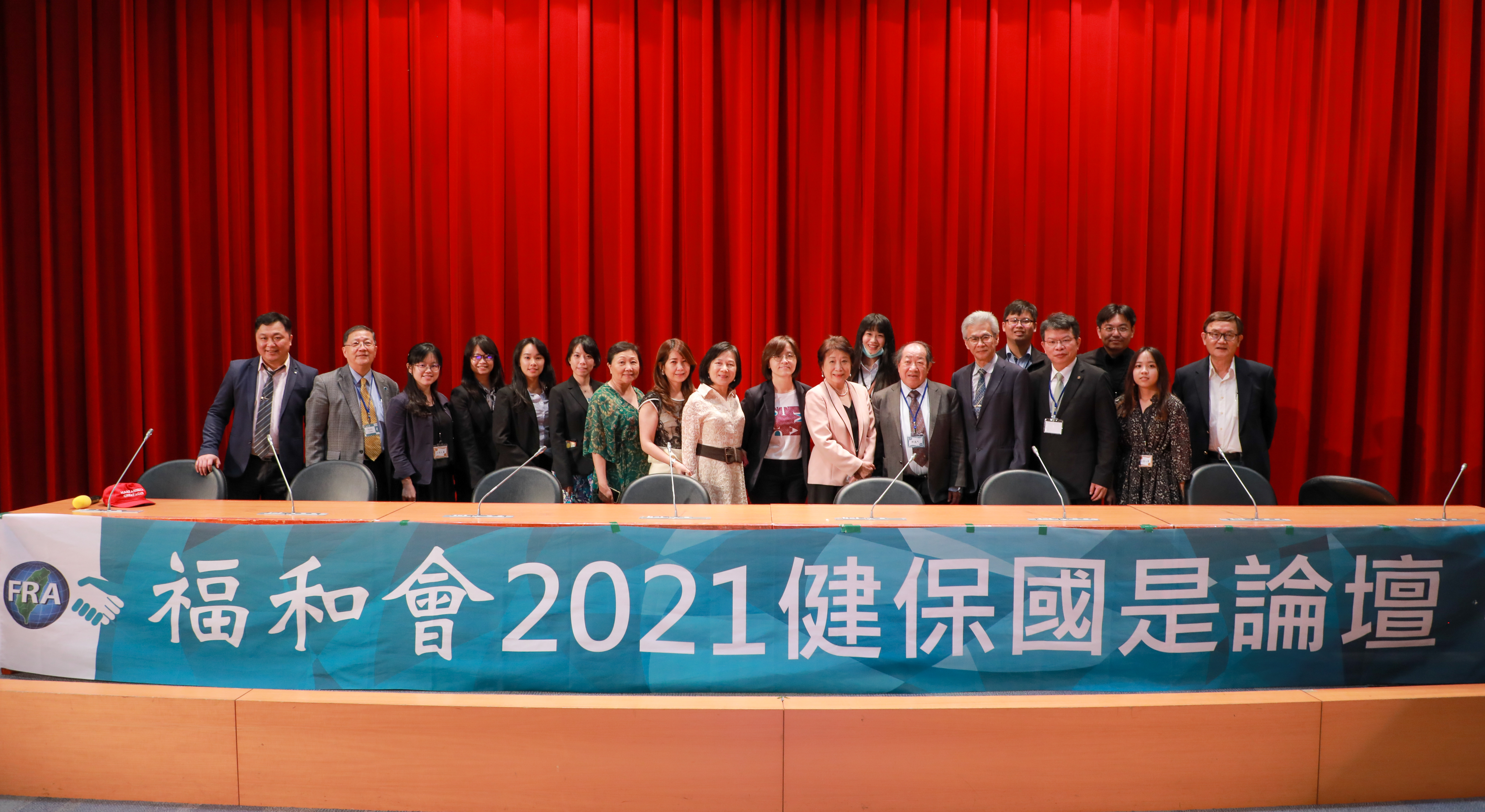
Building on the strong response to the 2020 National Health Insurance Forum, FRA continued its policy dialogue by hosting the FRA 2021 National Health Insurance Forum. The event once again brought together leaders from politics, government, the medical community, and youth organizations. Distinguished guests included Vice President Lai Ching‑te, former Vice President and Academia Sinica Academician Chen Chien‑jen, multiple legislators, the Directors‑General of both the Department of Social Insurance and the Department of Medical Affairs under the Ministry of Health and Welfare, the department chairs of the medical schools at National Taiwan University and Taipei Medical University, as well as numerous representatives from the healthcare sector and influential voices from civil society.
The forum opened with a keynote address delivered by former Vice President Chen Chien‑jen—a leading public health expert and a key figure in Taiwan’s successful SARS response, now an Academician of Academia Sinica. His speech examined the National Health Insurance system’s contributions to epidemic prevention and discussed strategies for ensuring its long‑term sustainability. Following the keynote, Vice President Lai Ching‑te delivered remarks to the assembly.
The first session began with Director‑General Shang Tung‑fu of the Ministry of Health and Welfare’s Department of Social Insurance, who explained the role and functions of the National Health Insurance Committee. This was followed by a panel discussion on the allocation of the National Health Insurance budget, featuring Professor Chou Ying‑cheng, Deputy Superintendent of National Yang Ming Chiao Tung University Hospital, together with legislators Chen Ying, Chiang Yung‑chang, and Tsai Yi‑yu.
The National Health Insurance Forum presented four key recommendations for strengthening the NHI Committee:
Enhance the representativeness of committee members
Respect medical professionalism
Ensure the committee fully exercises its mandated responsibilities
Improve meeting procedures and operational efficiency
n the afternoon session, Dr. Chang Pi‑cheng, physician at the NTU Sanchong Community Medical Network and Secretary‑General of the Taiwan Medical Association, together with Dr. Hung Te‑jen of the Beitou Community Medical Network—who also serves as Chairman of the Taiwan Community Development Association—shared insights drawn from their experience managing community medical networks. Their discussion focused on how to strengthen community health through integrated, locally rooted medical services.
The second session opened with a discussion on critical issues facing primary care. Some large medical institutions, despite already receiving allocations under the hospital global budget, have created subsidiary clinic companies under various pretexts to circumvent the hierarchical medical system. By doing so, they compete for portions of the primary‑care global budget, undermining the financial foundation on which grassroots clinics depend and disrupting the broader medical ecosystem. The forum emphasized that the government must address this problem seriously. The National Health Insurance Forum recommended that the competent authorities revise relevant regulations so that any outpatient department established by the same medical corporation or within the same healthcare system—regardless of whether it is structured as a clinic or located in a different administrative district—should be counted under the original hospital’s global budget allocation. This measure would prevent improper competition and protect the integrity of primary‑care operations.
In the National Health Insurance Act, co‑payments were originally designed according to a percentage‑based system. However, for administrative convenience, many items have instead been implemented using fixed‑amount payments. This fixed‑amount approach has proven ineffective in reducing medical waste and overutilization. The forum emphasized that the government should return to lawful administration by reinstating the statutory percentage‑based co‑payment system, in line with the NHI Act’s principle of hierarchical medical care: patients who seek care without referral, those with high utilization, or those who generate excessive waste should bear higher co‑payment responsibilities. As for protecting patients’ legitimate rights to access care, the forum stressed that such social welfare considerations should not be funded at the expense of the National Health Insurance system. Any additional subsidies intended to support vulnerable groups should be financed through separately allocated government budgets, rather than through NHI resources.
The foundation of Taiwan’s healthcare system lies in its medical professionals. Ensuring the continued quality of medical education is therefore a critical issue for the long‑term sustainability of Taiwan’s healthcare development. Medical training is highly specialized and complex; it requires many years of rigorous cultivation and extensive instruction from faculty across multiple disciplines. To maintain healthcare quality, the adequacy of teaching staff is essential. Blindly expanding medical school enrollment would inevitably lead to insufficient faculty resources and declining training standards
The concluding plenary session was moderated by Dr. Huang Kuo‑chin, FRA board member and director of the Taipei City Medical Association. The panel featured Legislator Lo Chih‑cheng, Secretary‑General of the Democratic Progressive Party caucus; Dr. Chou Ching‑ming, Chairman of the New Taipei City Medical Association and board member of the Joint Commission of Taiwan; Dr. Lo Chun‑hsuan, Deputy Secretary‑General of the Taiwan Medical Association and Executive Director of the Taiwan Society of Health Law; Dr. Lin Ying‑jan, Chairman of the Primary Care Association; Director‑General Liu Yueh‑ping of the Ministry of Health and Welfare’s Department of Medical Affairs; and Chen Kuan‑ting, CEO of the Taiwan NextGen Foundation.